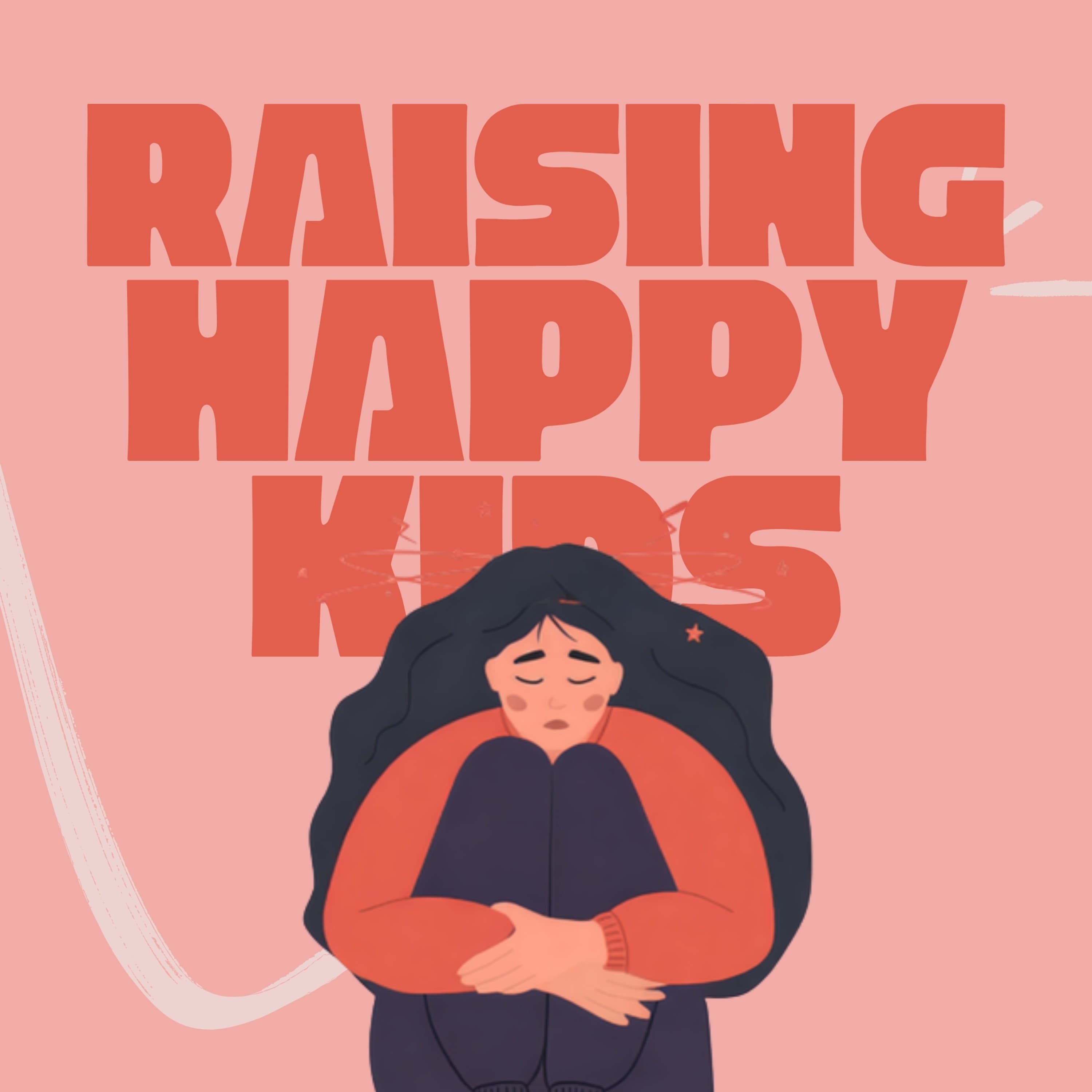
Audio playback
Kids Mental Health: How to Support Your Child’s Emotional Well-Being
Chapter 1
Intro
Mike Donnelly
Hey there, fam, and welcome to Raising Happy Kids — the podcast where we try to figure out how to, you know, not screw this whole parenting thing up. I’m Mike Donnelly.
Danielle Brooks
And I’m Danielle Brooks. Parenting is, like, the wildest, most rewarding—also most exhausting—job out there. And today, we're tackling a super important piece of the puzzle: ... mental health for our kids.
Mike Donnelly
... talking about emotional well-being, navigating their, uh, mini human rollercoaster lives—
Danielle Brooks
And all of that is why understanding their mental health, you know, really leaning in, recognizing, and supporting them—it’s critical to helping them thrive. I mean, emotionally, socially, and even academically, it all ties together.
Mike Donnelly
And please we’re not talking about perfection here because, let's face it, I—I still don’t know half the time what I’m doing. We’re here to break it all down: what’s really happening with kids these days, how to spot when they might be struggling, and of course, what you can do to help.
Danielle Brooks
Yeah, and it all starts with awareness. So, whether you're a parent, a teacher, or someone who just cares about the kids in your life, this conversation is for you.
Chapter 2
Recognizing the Early Signs
Danielle Brooks
When it comes to recognizing the early signs, here’s a reality check: Did you know the World Health Organization—it’s a big deal for these kinds of stats—says one in seven kids between 10 and 19 has some kind of mental health issue? I mean, That’s huge.
Mike Donnelly
That’s way more than I would’ve guessed. It’s like, in my kids’ school, you’re telling me every classroom has, what, a couple kids quietly struggling?
Danielle Brooks
Believe it Mike! Anxiety and depression are the two big ones they’re seeing. But here’s the tricky part—the signs aren’t always obvious, you know? A lot of times, they show up in the little changes, like mood swings or being super irritable. And kids, well, they don’t always tell you straight up how they're feeling.
Mike Donnelly
I know! Kids are basically masters at the whole “I’m fine” routine. My youngest—get this—he once didn’t talk about losing a soccer game for weeks but was randomly snapping at everyone... Turns out, he was just embarrassed and didn’t feel like he could say that out loud.
Danielle Brooks
Emotional changes like that, whether it’s sadness, anger, or just that feeling of a kid kinda pulling back from everything... that’s often a sign parents need to lean in instead of, you know, brushing it off.
Mike Donnelly
You know! Behavior shifts catch me off guard too. Like, my middle kid, Jamie—super outgoing. But after this one awful science project group—oh man, that got ugly fast—they started skipping study groups entirely. It was like they just didn’t wanna deal with it anymore. That’s when I I knew something was up.
Danielle Brooks
And that’s such a great point, Mike. When kids suddenly stop doing what they love—whether it’s skipping activities, avoiding friends, or zoning out during school—that’s a red flag. Even stuff like unexplained stomachaches or headaches can pop up because their emotions are, uh, spilling into their physical health.
Mike Donnelly
I mean, teenagers are already practically nocturnal, but when my oldest started waking up at three a.m. to binge 90’s sitcoms after his first breakup? Yeah, we had to step in there.
Danielle Brooks
Understand ... sleep or eating changes like that—they’re big indicators. I think one of the ones that hits hard for parents is school performance. Like, when grades tank or kids just kinda lose focus, that’s when the guilt kicks in, you know?
Mike Donnelly
For sure. It’s like, you start wondering, “Am I doing something wrong?” But honestly, recognizing those early signs is what it’s all about. Even small shifts can be a big deal. So, the key here is? Pay attention, don’t shrug it off, and just, uh, keep checking in with ‘em.
Chapter 3
Building Resilience and Offering Support
Mike Donnelly
You know, after all this about spotting the early signs, I keep thinking about how crucial it is to not just notice them, but actually act on them. So, let’s talk about the real challenge—how we, as parents, can step in and really help our kids thrive when they’re struggling.
Danielle Brooks
Mike I think It’s all about being proactive. One of the biggest things? Open communication. I mean, it sounds so simple, but just having those conversations where kids feel safe to talk about their feelings can make a world of difference.
Mike Donnelly
Um... Can we talk about how hard it is to get a teenager to open up? Like, you ask ‘em, “How was your day?” and the response is just—what? “Fine.”
Danielle Brooks
My favorite, “I don’t know.” Honestly,.. it’s about asking the right kind of questions. Like, instead of “How was your day?” try, “What’s been on your mind lately?” or “Anything cool happen today?” You know, open-ended stuff that gets them thinking a little more. Creating that safe space goes hand-in-hand with routines. Kids thrive on predictability—it gives them a sense of stability. Stuff like family dinners or bedtime rituals—it can be really grounding for them.
Mike Donnelly
Honestly. But on a good night, even if it’s pizza and chaos, we always do this little “highs and lows” game. Like, best moment of the day and worst moment. It’s small, but it gets us talking.
Danielle Brooks
I love that! It’s those little moments that add up. And for me, journaling was a big thing with my daughter. A couple years ago, she was having a tough time, and I’d leave her these blank journals. No pressure, but I’d tell her, “Write whatever you feel. No rules.” It really helped her work through some heavy emotions.
Mike Donnelly
That’s awesome. And I mean—yeah, logging your thoughts sounds healthy. Though, if I write mine down, do I have to go back and read ‘em? 'Cause it’s probably just grocery lists and random dad jokes.
Danielle Brooks
Well, maybe skip the dad jokes in this case. But speaking of healthy coping, mindfulness is another tool I swear by. Simple stuff, like breathing exercises or even a few minutes of quiet time, can really help kids manage stress. Even the hyper-energetic ones—you just have to find what clicks for them.
Mike Donnelly
Yeah, 'cause telling a hyperactive nine-year-old to “find their zen” probably won’t go well. But, like, if we make it a game? Maybe “who can stay quiet the longest” could be a winner.
Danielle Brooks
Exactly, make it fun! And here’s the thing—kids often learn by watching us. If they see us managing stress in a healthy way—like taking deep breaths or going for a walk—they’re gonna pick up on that. The old “lead by example” thing, you know?
Mike Donnelly
Totally. Though, full disclosure, my stress management sometimes involves Oreos and sports highlights. But I guess showing ‘em that it’s okay to talk about stress—and not just bottle it up—that’s huge.
Danielle Brooks
It’s not just on parents, either. Schools and communities play a big role in this. I mean, counseling services, mindfulness programs, even just having teachers who kinda “get it”—that stuff can be a game-changer.
Mike Donnelly
Quick shoutout to our favorite teachers, right? Like, I had this one in middle school—Mr. Lawson. He just always knew when we were off and had this way of making us talk about it without feeling awkward. We need more of that.
Danielle Brooks
Absolutely. And as parents, working with schools—staying in the loop with teachers, advocating for mental health resources—it’s key. These partnerships create such a solid support system for kids.
Chapter 4
When to Seek Help and Fighting Stigma
Danielle Brooks
You know, we’ve been talking about building support systems with schools and communities, but there are times when those systems need an extra layer. Sometimes, it’s about recognizing when professional help is the right next step for our kids. And making that call—it’s such an important part of the process.
Mike Donnelly
Listen ... when things are just too heavy, right? If your kid’s feeling, you know, super anxious all the time or they're pulling away from life altogether—it’s, uh, not something you wanna wait out.
Danielle Brooks
And the big red flags—talk of self-harm, extreme withdrawal, or those moments where, honestly, they just don’t seem like themselves. That’s when it’s time to reach out, whether it’s to a pediatrician, a counselor, or even a hotline in crisis situations.
Mike Donnelly
Like they say ... better safe than sorry, right? I mean, it’s like calling in the pros when your fridge starts making that weird noise. Except this is—well, obviously—way more serious.
Danielle Brooks
There's no shame in it. Getting professional help doesn’t mean you’ve failed as a parent—it means you’re willing to do whatever it takes for your kid. That’s love in action.
Mike Donnelly
You know what really bugs me? The stigma. Like, why is it that going to a doctor for a broken arm is totally cool, but going for mental health feels like a big secret?
Danielle Brooks
The best way to fight that is to talk about it, openly and honestly. Normalize the idea that emotions and mental health—it’s all part of being human. At home, with friends, even in schools—it starts with conversations.
Mike Donnelly
Dan..., I remember this one local school back in Ohio—small place, kind of like where I grew up. They started training teachers in mental health first aid, and suddenly, kids were feeling more comfortable talking about what was bothering them. It’s—honestly—a pretty simple thing with a huge impact.
Danielle Brooks
When schools and communities normalize mental health discussions, it creates this ripple effect. Kids feel seen, heard, and supported. And there are so many tools out there for parents, too. Resources like age-appropriate books, apps, and even podcasts, like ours.
Danielle Brooks
All these little steps add up. And no one’s perfect at this—it's a learning process.
Mike Donnelly
If parenting came with an instruction manual, it’d probably be longer than, like, a tax code. But hey, we’re all figuring it out together. And these conversations—this stuff right here—it makes a difference.
Danielle Brooks
It does. So, talk to your kids, ask questions, and don’t be afraid to lean on teachers, communities, or professionals when you need to. It takes a village, right?
Mike Donnelly
Folks,.. thanks for tuning in today. You’re doing great, no matter what it feels like in the chaos of the moment—trust me.
Danielle Brooks
Parenting isn’t about being perfect, it’s about showing up. So, until next time, take care of yourselves and your little ones. Thanks for joining us.